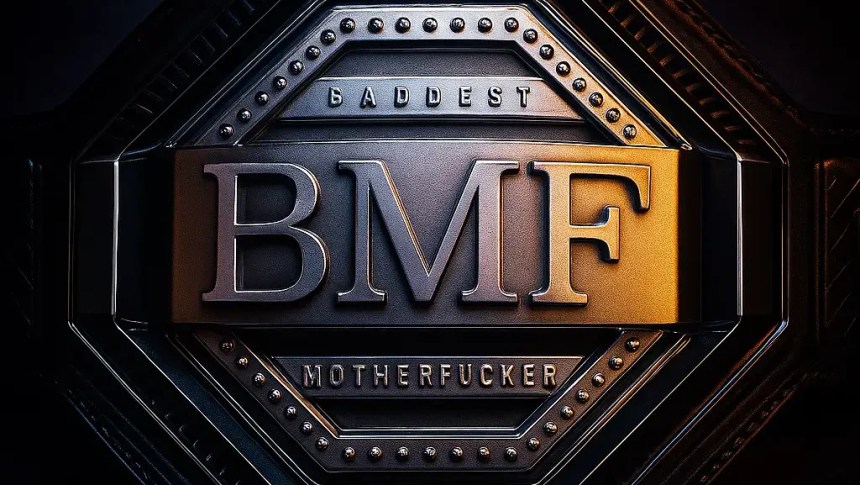
When Jorge Masvidal walked out at UFC 244 with swagger and attitude, and Dwayne “The Rock” Johnson stood in the Octagon with a brand-new belt in his hands, it was clear the UFC had created something out of the ordinary. That night, the inaugural BMF (Baddest Motherf***er) Title was introduced to the world.
But five years later, the debate remains strong among MMA fans and analysts: is the BMF title a real championship, or simply a clever marketing tool?
Here’s a closer look at the origins, purpose, and legacy of the BMF title and whether it deserves to be taken seriously.
The Birth of the BMF Title
The BMF belt wasn’t born out of rankings, title eliminators, or meritocracy. Instead, it was born out of a moment between two popular fighters.
In 2019, Jorge Masvidal had risen to stardom following back-to-back highlight-reel finishes over Darren Till and Ben Askren. Nate Diaz, who had just returned after a long layoff with a win over Anthony Pettis, called Masvidal out and declared him a worthy opponent.
“I’m the baddest motherf***er in the game,” Diaz said, and the UFC leaned into it. Instead of dismissing the comment as promotional hype, the UFC capitalized. The two headlined UFC 244 in New York City in a bout labeled for the newly minted “BMF Title.”
UFC President Dana White initially said the belt would be a one-time thing and just a fun addition for fans. That statement didn’t age well.
UFC 244: More Than Just a Fight
UFC 244, held at Madison Square Garden in November 2019, was a blockbuster event. It drew over 925,000 pay-per-view buys and featured appearances from celebrities, including The Rock, who presented the BMF belt to the winner.
Masvidal won the fight via doctor stoppage after Diaz was deemed unable to continue due to a cut over his eye. While some fans were disappointed by the anticlimactic ending, the event itself proved to be a massive success.
What was intended as a one-time novelty became a legitimate draw. The UFC saw the numbers and realized the value.
What Defines a “Real” Title in the UFC?
In traditional terms, a UFC championship is defined by its structure. A title exists within a weight class, has a clear hierarchy through rankings, and is defended regularly against top contenders.
The BMF title, on the other hand, operates outside those lines. It is not tied to any division. It does not rely on rankings. And it was not originally designed to be defended or recognized in any official capacity.
This lack of structure has fueled criticism, with many purists calling it a gimmick rather than a true championship.
Gimmick or Genius?
Arguments for Gimmick:
- No Division or Rankings
The BMF title has no official contenders or mandatory challengers. It exists outside the UFC’s established title structure, which makes it more of a symbolic trophy than a legitimate belt.
- Market-Driven Creation
The belt was created purely to sell a single pay-per-view. It was not built on performance or merit, but on popularity and personality.
- Infrequent Appearances
After Masvidal won the belt in 2019, he never defended it. It wasn’t mentioned again until four years later at UFC 291. That kind of gap would never happen with a real championship.
- Entertainment Over Competition
Critics argue that the concept feels more like professional wrestling than professional fighting, prioritizing hype over substance.
Arguments for Legitimacy:
- Fan Engagement
The BMF title resonates with fans. It represents toughness, fearlessness, and charisma. Qualities that casual and hardcore fans alike admire. In a sport built on grit, there’s value in that.
- Fighter Motivation
Top names like Dustin Poirier, Justin Gaethje, and Max Holloway have all pursued the belt. That pursuit adds weight to the title, even if it falls outside traditional ranking systems.
- UFC’s Endorsement
The UFC controls its championship landscape. If the organization continues to recognize and promote the BMF title, then by its own standards, it holds value.
- A Growing Legacy
The belt now has a history. It has been contested multiple times and is held by top-tier fighters. That’s more than can be said for some promotional titles in combat sports.
The Belt’s Second Life: UFC 291
The BMF title returned at UFC 291 in July 2023. This time, it was Dustin Poirier vs. Justin Gaethje headlining the card in Salt Lake City.
Gaethje won the bout with a spectacular second-round head-kick knockout, claiming the title in emphatic fashion. The fight sold approximately 700,000 PPVs, once again proving the BMF brand is a money-maker.
Unlike Masvidal, Gaethje embraced the title and brought it into the spotlight. He carried the belt to media events and acknowledged it as a symbol of violence and heart: two qualities he’s known for.
UFC 300: BMF Steals the Show
The BMF title reached another level of recognition at UFC 300 in April 2024, where Justin Gaethje defended it against Max Holloway.
The result was an instant classic. With just one second left in the fifth round, Holloway delivered a stunning knockout that earned him the title and sent the MMA world into a frenzy.
The knockout was widely hailed as one of the greatest moments in UFC history. More importantly, it established the BMF belt as more than just a novelty. Holloway proudly wore the title and declared himself the true embodiment of what it stands for.
Still Controversial
Despite its moments of glory, the BMF title remains controversial. Hardcore fans and some analysts argue that titles should be earned through traditional routes contenders climbing rankings and defeating the best.
The BMF title, by contrast, can be awarded based on popularity, style, or simply fan demand.
Even Dana White continues to refer to it as a “fun belt,” suggesting it exists outside the UFC’s competitive framework.
Final Thoughts
The BMF title may have started as a marketing gimmick, but it has evolved into something more. It represents a different side of mixed martial arts. A side that values personality, grit, and entertainment as much as technical dominance.
It may never have the prestige of the UFC’s divisional championships, but it doesn’t need to. It exists in its own lane and continues to draw attention, sell tickets, and create memorable moments.
At its core, the BMF belt is both a clever promotional tool and a badge of honor. And in a sport that thrives on intensity, drama, and unpredictability, perhaps that’s enough.
Whether you consider it a real title or not, one thing is clear: when the BMF belt is on the line, fans are paying attention.
Follow FIGHTCORE for more updates.