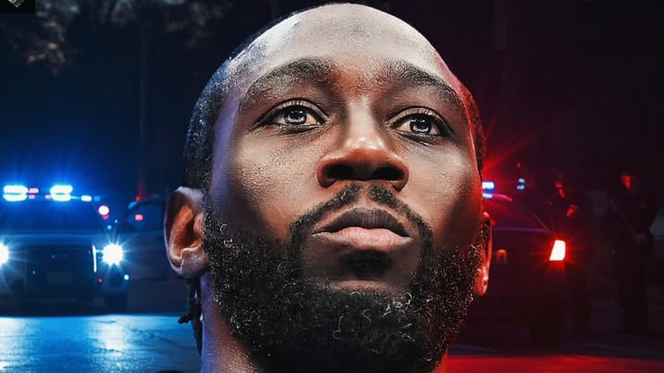
Terence Crawford’s retirement closed the book on one of the most complete careers in modern boxing. Finishing 42 and 0, undisputed in three weight classes, and coming off a historic win over Canelo Alvarez, Crawford left the sport with little left to prove. Yet when asked to identify the hardest fight of his career, the answer surprised many.
It was not Canelo. It was not Errol Spence Jr. It was a fight from more than a decade ago at lightweight against Yuriorkis Gamboa.
Speaking candidly during a recent livestream appearance with Adin Ross, Crawford offered an unfiltered reflection on his journey and the moments that shaped him the most.
Terence Crawford says Canelo is NOT the hardest fighter he’s ever fought 🗣️
— Source of Boxing (@Sourceofboxing) December 28, 2025
“Gamboa, and that was at 135.” pic.twitter.com/LhqCmHvb6q
A Career Defined by Control and Adaptation
Crawford’s final bout in September saw him move up two weight classes to defeat Canelo Alvarez and capture the undisputed super middleweight championship. The performance was widely praised as a technical masterclass, one that showcased his timing, composure, and ability to neutralize elite opposition.
That victory capped a career that already included undisputed titles at super lightweight and welterweight. Crawford beat champions in multiple eras and consistently solved different styles without relying on a single physical advantage. His ability to switch stances, adjust mid fight, and dictate pace became his calling card.
Despite that résumé, Crawford has often downplayed individual accolades when reflecting on his legacy. In retirement, his perspective has shifted further toward moments of adversity rather than career defining achievements.
Why the Canelo Fight Did Not Top the List
When asked directly if Canelo Alvarez was the toughest opponent he ever faced, Terence Crawford dismissed the idea without hesitation.
He explained that while Canelo was elite and dangerous, the fight itself never reached a point where he felt truly pushed beyond his limits. Crawford controlled the range, disrupted Canelo’s rhythm, and rarely found himself in prolonged danger.
That assessment does not diminish the scale of the achievement. Beating Canelo at super middleweight remains one of the most significant wins of the decade. However, for Crawford, difficulty is measured less by the opponent’s reputation and more by how much resistance they create inside the ring.
Yuriorkis Gamboa and the Fight That Shaped Terence Crawford
Crawford identified Yuriorkis Gamboa as the hardest fight of his career, pointing specifically to their 2014 lightweight title bout in Omaha.
At the time, Gamboa was an Olympic gold medalist, an explosive athlete, and one of the most naturally gifted fighters Crawford had ever faced. Early in the fight, Gamboa’s speed and power created real problems. He won exchanges, forced Crawford to react defensively, and tested him in ways few opponents ever had.
Crawford acknowledged that Gamboa was the only fighter who consistently made him uncomfortable at 135 pounds. Before Crawford found his rhythm and began scoring knockdowns, he had to survive moments where the fight could have tilted the other way.
That experience left a lasting impression.
It was not just the physical challenge. It was the mental adjustment required to slow the fight down, make reads under pressure, and impose control against an opponent operating at full intensity.
Growth Through Adversity
The Gamboa fight marked a turning point in Crawford’s career. From that night forward, his ability to remain composed under fire became one of his greatest strengths. He no longer rushed exchanges or relied solely on reflexes. Instead, he layered his offense and trusted his adaptability.
Many of Crawford’s later signature wins followed a similar pattern. He absorbed early information, adjusted his approach, and gradually dismantled opponents who started strong. The difference was that after Gamboa, those adjustments came faster and with greater confidence.
In hindsight, Crawford views that fight as foundational. It was the moment he learned he could be hurt, recover, and still dominate.
Retirement and a Career Without Regret
Terence Crawford announced his retirement shortly after being stripped of the super middleweight title, a move that surprised many given his recent success. He has since explained that age and fulfillment played the largest roles in his decision.
At 38, with championships across multiple divisions and victories over elite competition, Crawford saw no unfinished business. He also made it clear that potential blockbuster matchups or legacy debates were not enough to draw him back.
When asked about hypothetical fights against Floyd Mayweather, Crawford dismissed the idea outright, stating that he has no interest in returning for nostalgia driven bouts.
How History May Remember the Gamboa Fight
While casual observers may focus on Crawford’s later accomplishments, the Gamboa fight continues to stand out among boxing purists. It showcased a young champion being tested, adapting in real time, and emerging stronger.
Yuriorkis Gamboa never regained his early career momentum, but his role in Crawford’s development remains significant. He forced Crawford to grow before the world fully recognized his greatness.
In many ways, that night at lightweight laid the groundwork for everything that followed. Titles, pound for pound rankings, and historic wins all trace back to lessons learned under pressure.
For Terence Crawford, the toughest fight was not the biggest stage or the most lucrative payday. It was the one that demanded the most from him when his career was still being shaped.
And that, perhaps, says more about his greatness than any championship belt ever could.
Follow FIGHTCORE for more updates.